Destination Guide · Japan · Updated June 2026
Japan from India: The Visa Changes Everything
Unlike most of Asia, Japan is not visa-free for Indians. Here's the real 2026 cost breakdown — visa, flights, JR Pass vs regional tickets, and a 7-day Tokyo budget — once you account for it.
Japan is the one country on most Indian travellers' wish lists that quietly breaks the "visa-free Asia" assumption. Thailand, Indonesia, Malaysia, Vietnam — all visa-free or e-visa for Indians in 2026. Japan still requires a visa, full stop, and most guides either get the current process wrong or quote outdated fees. Here's what a Tokyo trip actually costs once the visa is done correctly.
Visa: Japan Is Not Visa-Free for Indians
This is the headline difference from most of Wingit's other destination guides. India does not have a visa-exemption or visa-on-arrival arrangement with Japan. Every Indian passport holder needs an approved visa before departure — there's no airport option.
The good news for 2026: since September 2025, Japan opened its eVisa system to Indian applicants for short-term tourist visits, which has cut paperwork significantly. The catch is that Indians cannot apply directly on the official JAPAN eVISA portal — applications must go through an accredited travel agency or VFS Global in India, not a do-it-yourself online form like Sri Lanka's or Vietnam's e-visa.
⚠ Japan requires a visa — budget the time, not just the money
Single-entry tourist visa
Visa fee approx. Rs. 500, plus a mandatory VFS Global service charge of approx. Rs. 800, plus optional courier charges of Rs. 500–550 for home delivery. Total: approx. Rs. 1,300–1,850. Processing: 5–10 working days.
Multiple-entry visa (up to 5 years)
Available if you've visited Japan twice or more in the last 3 years, or once plus travel history to another G7 country. Fee is higher (roughly 30,000 yen at overseas missions vs. 15,000 yen single-entry) — worth it only if you plan repeat trips.
eVisa via accredited agents
Indians can now use Japan's eVisa system, but only by routing the application through an accredited Indian travel agency, not directly on the MOFA portal. Ask your agent specifically whether they support eVisa processing — not all do yet.
Documents needed: valid passport (6+ months validity), recent photo, bank statements (typically last 3–6 months), confirmed flight itinerary, hotel bookings or an invitation letter, and an income/employment proof letter. Self-employed and business owners typically need additional documentation — check with VFS Global's current checklist before applying, since requirements get revised periodically.
Flights from India to Tokyo
Tokyo has two airports: Narita (NRT), further from the city centre, and Haneda (HND), closer in and increasingly preferred for both convenience and often-comparable fares. Direct and one-stop flights run from Delhi and Mumbai; from Bengaluru, Kolkata, Chennai, Ahmedabad, Hyderabad, and Kochi, expect at least one connection (commonly via Bangkok, Singapore, or Hong Kong).
Return economy fares for 2026 typically range Rs. 45,000–90,000 per person, depending on season and booking window. Booking 2–3 months ahead generally lands you in the Rs. 45,000–70,000 band; last-minute or cherry-blossom-season (late March–April) bookings can push past Rs. 90,000–1,10,000. Flight time from Delhi is roughly 8–9 hours direct, longer with a layover.
Check current deals on the NRT and HND routes from your city before paying the standard fare — Wingit flags Tokyo fares whenever they drop 15%+ below the recent benchmark, which on this route can mean savings of Rs. 15,000–25,000 over the standard price.
JR Pass vs Regional Tickets: What Actually Makes Sense in 2026
The classic advice — "just buy the JR Pass" — needs an update. Japan Rail raised JR Pass prices in 2023 and is raising them again from October 1, 2026, making the old "always worth it" rule no longer universally true, especially for a Tokyo-focused trip.
JR Pass (national, 7-day)
- ·Approx. 53,000 yen ordinary class from October 2026 — roughly Rs. 29,000–31,000 depending on the rate at booking
- ·Only worth it if you're doing long-distance travel: Tokyo–Kyoto–Osaka–Hiroshima style multi-city routes on the Shinkansen
- ·Must be purchased before specific use; covers most JR trains and the Shinkansen (excluding Nozomi/Mizuho on some passes)
- ·A single Tokyo–Kyoto–Tokyo Shinkansen round trip alone can cost close to half the pass price — needs at least 2-3 such legs to pay off
Tokyo-only: Suica/PASMO IC card
- ✓IC card (Suica or PASMO) for Tokyo Metro, JR Yamanote Line, and buses — pay-as-you-go, no commitment
- ✓Typical Tokyo metro/JR fare: 150–300 yen per ride (approx. Rs. 80–165)
- ✓A week of heavy Tokyo-only sightseeing on an IC card usually costs far less than a 7-day JR Pass
- ✓Best choice if your itinerary is Tokyo plus a day trip or two, not a multi-city rail tour
💡 Rule of thumb for 2026 pricing
For a Tokyo-and-Mount-Fuji-area trip specifically, a regional pass (such as a Fuji-area bus/rail combination ticket) or simply paying per-ride on an IC card is usually cheaper than the national JR Pass.
Where to Stay: Capsule Hotels and Budget Hostels
Tokyo's accommodation scene has a genuine budget tier that most first-time visitors don't know to look for.
Basic capsule hotels
Older, simpler pods, often in Ueno or Akihabara. Shared bathrooms, locker storage, basic but clean. Some properties are men-only — check before booking as a couple or solo woman traveller.
Modern capsule chains
Chains like Nine Hours and Smart Stay Shizuku — better privacy, in-room amenities, often mixed-gender floors. Good middle-ground for first-timers.
Hostel dorm beds
Shared dorms with lockers, Wi-Fi, and often a common kitchen — useful for saving on food too. Widely available across Shinjuku, Asakusa, and Ueno.
Expect weekend rates to run 30–60% higher than weekday rates at the same property — shifting a trip to start mid-week can meaningfully cut accommodation costs. For a couple or small group, a budget business hotel (typically 8,000–14,000 yen/night, approx. Rs. 4,400–7,700) often works out similar per person to two capsule beds, with more privacy.
Food in Tokyo: Budget Eating and Vegetarian Survival
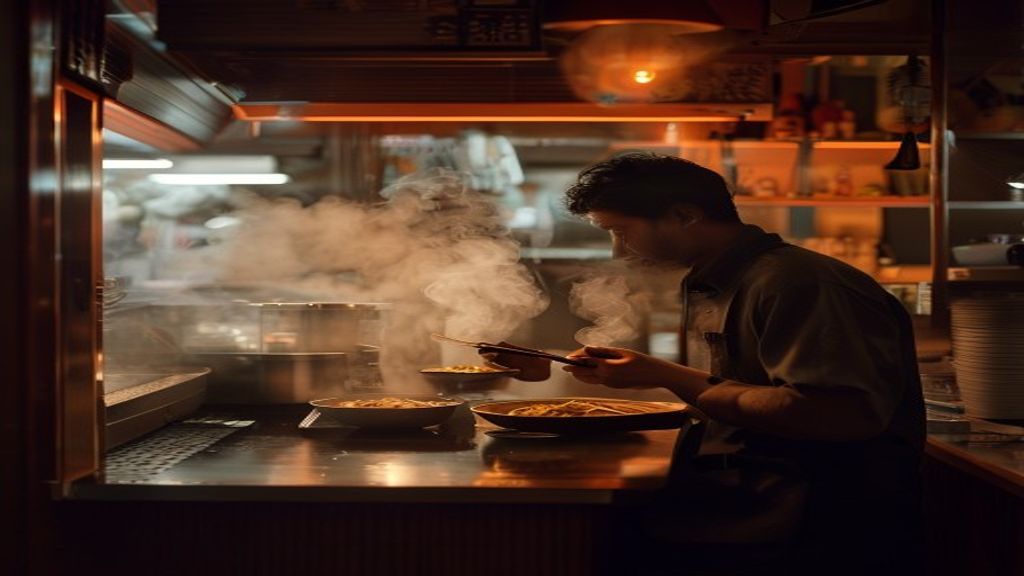
Tokyo's budget food scene is excellent value if you know where to look — and vegetarian options exist, but they take a bit more planning than in Bangkok or Singapore.
Conveyor-belt sushi (kaiten-zushi)
Chains like Sushiro and Kura Sushi start plates at around 120 yen each; a filling meal for one runs 1,500–2,500 yen (approx. Rs. 825–1,375). One of the best value meals in the city, vegetarian-friendly plates (cucumber, tamago, inari) included.
Ramen counters
A standard bowl at a neighbourhood ramen-ya runs 800–1,200 yen (approx. Rs. 440–660). Note: most ramen broth is pork or chicken-based — ask specifically for shio or vegetable-based broth (kosode/vegan ramen shops exist but are a minority).
Indian vegetarian restaurants
Tokyo has a real Indian-vegetarian dining scene — Nataraj (4 locations, organic farms, lunch buffets around 1,500 yen), Veg Kitchen Tokyo (lunch sets 750–1,350 yen, Jain options on request), and Vege Herb Saga, which imports spices from India and caters specifically to Jain diners.
Daily food budget: Rs. 1,800–2,800 per person mixing convenience-store meals (onigiri, bento — 300–600 yen) with one proper sit-down meal. Rs. 3,500–5,000+ if eating at sit-down Indian-vegetarian restaurants for most meals, which is the safer call for strict vegetarians or Jain travellers since menu English and ingredient transparency vary at local Japanese spots.
✓ Convenience stores are a real meal option
Cherry Blossom Timing for 2026
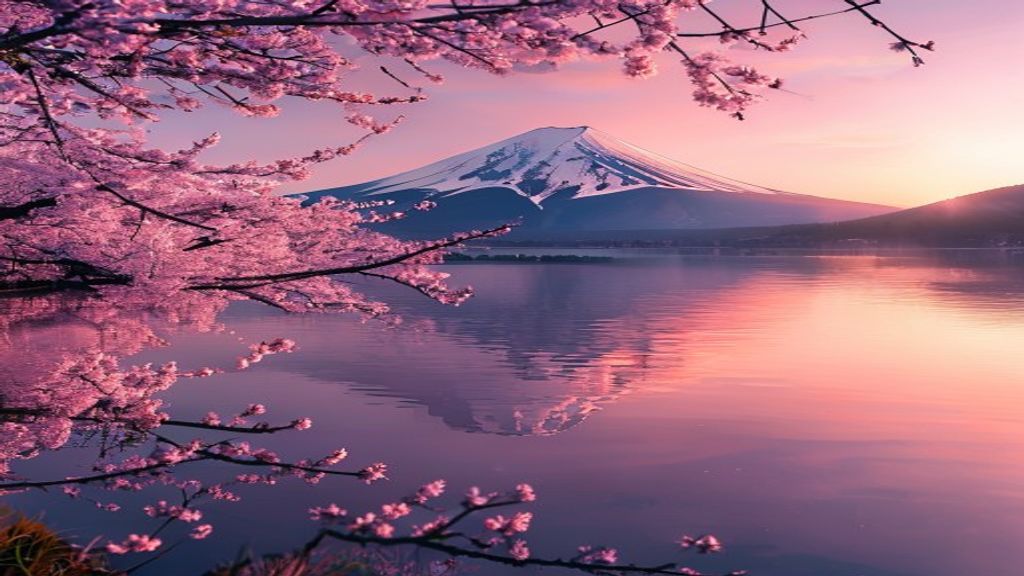
If cherry blossoms are the reason for the trip, timing precision matters more than almost anything else in the plan. Forecasts for Tokyo in 2026 point to first bloom around March 19–21 and full bloom around March 27–28 — a few days earlier than the historical average.
This is also peak demand season: flights and hotels both spike 30–50% above off-season pricing in the two weeks bracketing full bloom. If budget matters more than guaranteed peak bloom, aim for early April — you'll likely catch the tail end of blossoms in Tokyo and full bloom further north or at higher elevation (Kawaguchiko, near Mount Fuji, blooms slightly later than central Tokyo).
💡 Book flights and hotels 3-4 months out for cherry blossom season
7-Day Tokyo Budget Itinerary
7 Days in Tokyo and Around
Day 1 — Arrival and Shinjuku/Shibuya orientation
Land at NRT or HND, IC card top-up at the airport, train to your hotel. Evening at Shibuya Crossing and Shinjuku's neon streets — both free to wander. Total day spend: Rs. 1,200–1,800 on transport and a convenience-store dinner.
Day 2 — Asakusa and old Tokyo
Senso-ji Temple (free), Nakamise shopping street, Sumida River walk. Tokyo Skytree observation deck costs 2,100–3,400 yen (approx. Rs. 1,150–1,870) depending on deck level — optional. Total spend: Rs. 1,800–3,500.
Day 3 — Akihabara and a conveyor-belt sushi lunch
Akihabara's electronics and anime stores (free to browse), conveyor-belt sushi lunch (approx. Rs. 1,200), Ueno Park in the afternoon. Total spend: Rs. 2,000–3,000.
Day 4 — Day trip to Kawaguchiko (Mount Fuji)
Regional bus or train ticket (not the national JR Pass) to the Fuji Five Lakes area — round trip approx. 5,000–6,500 yen (Rs. 2,750–3,575). Best Fuji views with cherry blossoms in season at the lake's edge. Total spend including a meal: Rs. 3,500–4,500.
Day 5 — Harajuku, Meiji Shrine, and Indian vegetarian dinner
Meiji Shrine (free), Takeshita Street and Omotesando shopping/people-watching, dinner at an Indian-vegetarian restaurant like Nataraj. Total spend: Rs. 2,500–3,500.
Day 6 — Tsukiji Outer Market and teamLab Planets
Tsukiji Outer Market for breakfast and snacks (Rs. 500–800), teamLab Planets digital art museum (approx. 3,800 yen / Rs. 2,100 — book online ahead, slots sell out). Total spend: Rs. 2,800–3,800.
Day 7 — Last-minute shopping and departure
Don Quijote or a depachika (department store basement food hall) for souvenirs and snacks — better value and selection than airport duty-free. Total spend: Rs. 1,500–3,000.
Total 7-day budget: Visa Rs. 1,500 + Flights Rs. 55,000 (Wingit deal price) + Accommodation Rs. 16,000 (6 nights capsule/budget hotel) + Food Rs. 14,000 + Local transport (IC card) Rs. 2,500 + Activities and day trip Rs. 6,500 = approximately Rs. 95,500–1,00,000. Without a deal on flights (standard fare Rs. 75,000+), the same trip runs closer to Rs. 1,20,000–1,30,000.
Mistakes Indian Travellers Make Planning a Japan Trip
6 Japan Mistakes That Blow the Budget (or the Trip)
Assuming Japan is visa-free like Thailand or Indonesia
Japan has no visa-on-arrival and no self-service e-visa for Indians. Applying late — inside 2–3 weeks of departure — risks missing the trip entirely if documentation needs a resubmission round. Start the visa process the moment flights are booked.
Buying a 7-day JR Pass for a Tokyo-only trip
At roughly Rs. 29,000–31,000 from October 2026, the national JR Pass only pays for itself with 2 or more long-distance Shinkansen legs. A Tokyo-and-Fuji trip is usually cheaper on an IC card plus a regional ticket for the Fuji day trip.
Not pre-booking popular attractions
teamLab Planets, Ghibli Museum, and Shibuya Sky regularly sell out days to weeks ahead, especially in cherry blossom and autumn foliage season. Book timed-entry tickets online as soon as dates are fixed.
Assuming any restaurant will have a vegetarian option
Many Japanese dishes use dashi (fish stock) as a base even when the dish looks vegetarian. Strict vegetarians and Jain travellers should target known Indian-vegetarian restaurants or confirmed vegetarian/vegan spots rather than guessing at a local izakaya.
Travelling during cherry blossom week without booking 3-4 months ahead
Late March to early April sees flights and capsule hotels both jump 30-50% above off-peak rates, and popular hanami spots get crowded fast. If budget is the priority over guaranteed peak bloom, shift to early April or accept the price premium.
Carrying too much cash or relying only on cards
Japan is more cash-reliant than most of Asia, especially at smaller restaurants and rural stations, but convenience stores and most hotels now take cards and IC cards. Carry some yen cash plus a card — don't assume either alone covers everything.
Frequently Asked Questions
A 7-day Tokyo-focused trip costs approximately Rs. 95,000–1,00,000 per person including return flights at a deal price, the Japan visa, 6 nights in budget capsule/hostel accommodation, food, local transport, and a Mount Fuji day trip. Without a flight deal, expect closer to Rs. 1,20,000–1,30,000. A trip including multi-city rail travel (Tokyo-Kyoto-Osaka) with a JR Pass runs higher.
Yes. Unlike Thailand, Indonesia, or Malaysia, Japan has no visa-free or visa-on-arrival arrangement for Indian passport holders. Since September 2025 an eVisa system exists for Indians, but it must be processed through an accredited travel agency or VFS Global, not applied for directly online. Total cost is typically Rs. 1,300–1,850 including service charges; processing takes 5-10 working days.
Usually not. From October 2026 a 7-day ordinary-class JR Pass costs around 53,000 yen (roughly Rs. 29,000-31,000). It only pays off with 2 or more long-distance Shinkansen journeys. For a Tokyo-plus-day-trip itinerary, a Suica or PASMO IC card for local transport plus a regional ticket for trips like Kawaguchiko is cheaper.
Late March to early April for cherry blossoms (Tokyo's 2026 forecast points to full bloom around March 27-28), or October-November for autumn foliage, are the most popular and most expensive windows. For lower prices with still-pleasant weather, May-June and late September-early October are good alternatives, though early June can edge into Japan's rainy season.
Yes, with some planning. Tokyo has dedicated Indian-vegetarian restaurants (Nataraj, Veg Kitchen Tokyo, Vege Herb Saga) that cater specifically to vegetarian and Jain diners. For Japanese food, conveyor-belt sushi chains have vegetarian plate options, but be cautious with ramen and other dishes that often use fish-based dashi stock even when they appear vegetarian.
Return economy fares typically range Rs. 45,000-90,000 per person depending on season and booking window, flying into either Narita (NRT) or Haneda (HND). Booking 2-3 months ahead generally costs less; cherry blossom season (late March-April) and last-minute bookings push fares toward Rs. 90,000-1,10,000.
Never miss a deal
Tokyo flights just dropped.
Wingit scans NRT and HND fares from all 8 Indian metros 3 times daily and alerts you the moment prices fall 15%+ below benchmark. Free for every Indian traveller.
Updated June 2026. All prices are estimates — verify before booking. Prices shown in local currency — use Google or xe.com for current INR conversion.
Related: Best Time to Book International Flights from India · Indian Passport Visa-Free 2026